What is a Minute Repeater? In its simplest definition, a minute repeater is a high-end watchmaking complication that allows the watch to audibly announce the current time at the user's request. But this definition is a bit dry. Because in the world of watches, the minute repeater is more than just a mechanical trick; it's a small acoustic ritual born from the need to tell the time in the dark, and today it has become one of the most emotionally charged complications for collectors.
When you start a chronograph, the hands move. When you look at a perpetual calendar, you see calendar information. A minute repeater, however, winds the time by ear, not by eye. Inside the case are two small hammers, two gongs, and a complex mechanism that controls them; the result is that the watch tells you the time with ding, dong, and double-tone beats. According to the Fondation Haute Horlogerie, the classic minute repeater announces the hours, quarters, and minutes after the last quarter with different tones.
For those who want to see one of the most extreme examples of this family of acoustic complications... Vacheron Constantin 57260 The section on ringing and alarms in the text offers good supplementary reading.
Why is a Minute Repeater Clock So Important?
A minute repeater watch isn't a practical necessity today. Phone screens, night vision, lumens, LED lights... telling time has never been easier. But that's precisely where the importance of this complication begins. The fact that it's still made even though it's no longer required makes it one of the purest areas of watchmaking craftsmanship.
Historically, repeater mechanisms were developed to tell time in the dark or when visual observation was not feasible. The Fondation Haute Horlogerie states that quarter-repeat clocks appeared in England around 1675; Edward Barlow, Thomas Tompion, and Daniel Quare, who patented it in 1687, played a role in this development. Early minute repeater mechanisms, which tell the minute more accurately, are attributed to the early 18th century.
In today's collector's world, the value of a minute repeater is far more than just hearing the time. It demonstrates how deeply a brand has delved into mechanical design, acoustic engineering, case manufacturing, fine-tuning, and craftsmanship. In a sense, the minute repeater showcases the brand's... I can make mechanical watches. rather than saying I can transform metal into sound. That's what he means.
How does Minute Repeater work?
A classic minute repeater is typically activated by a slider or button on the side of the case. This action winds a separate spring that energizes the repeater mechanism and initiates the chime sequence. FHH notes that this slider winds the mechanism and triggers the chime sequence, with the sound being produced via two hammers and two gongs.
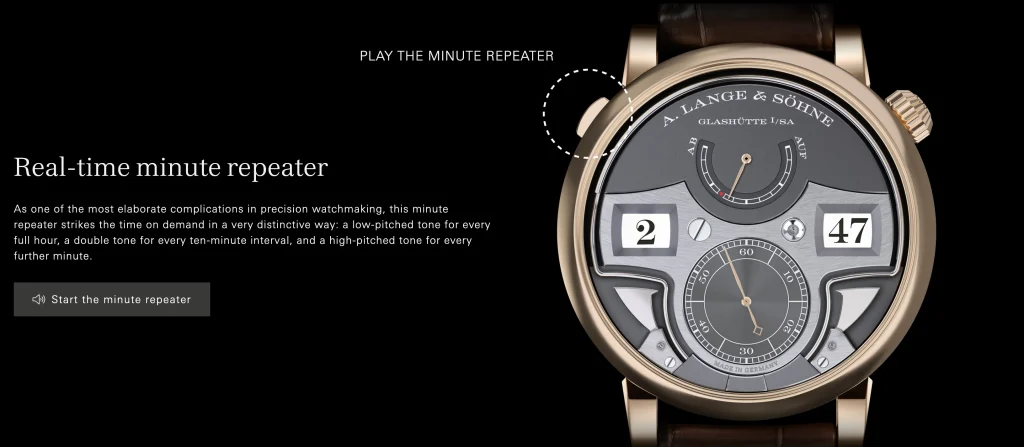
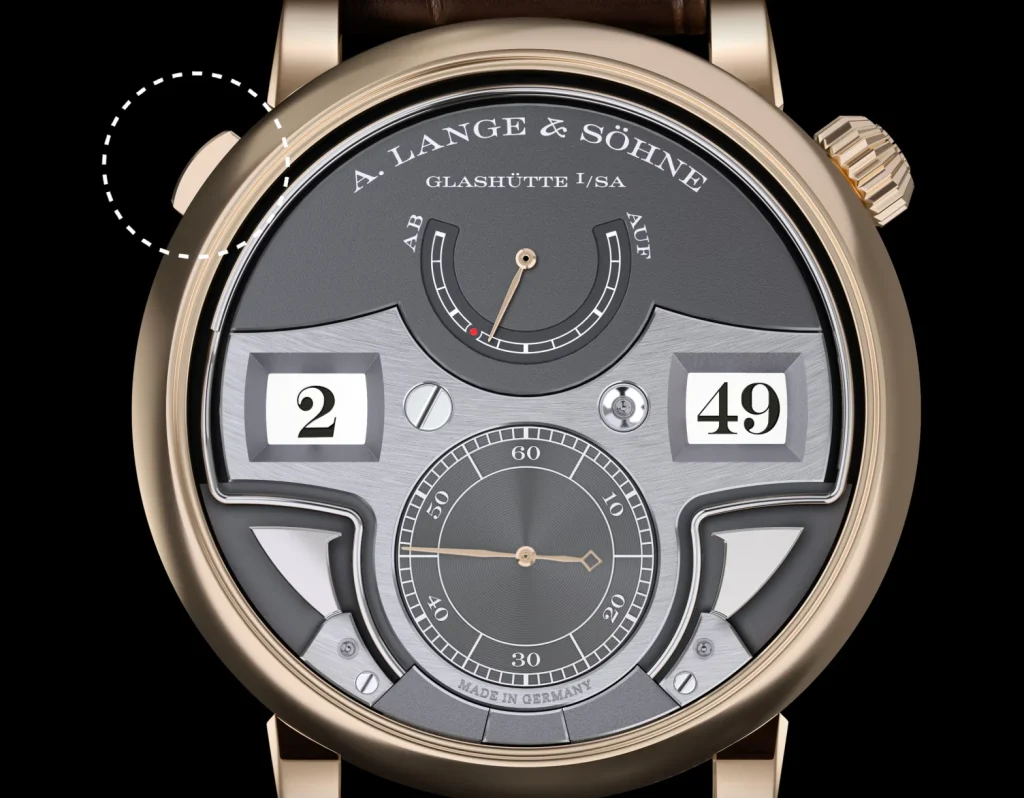
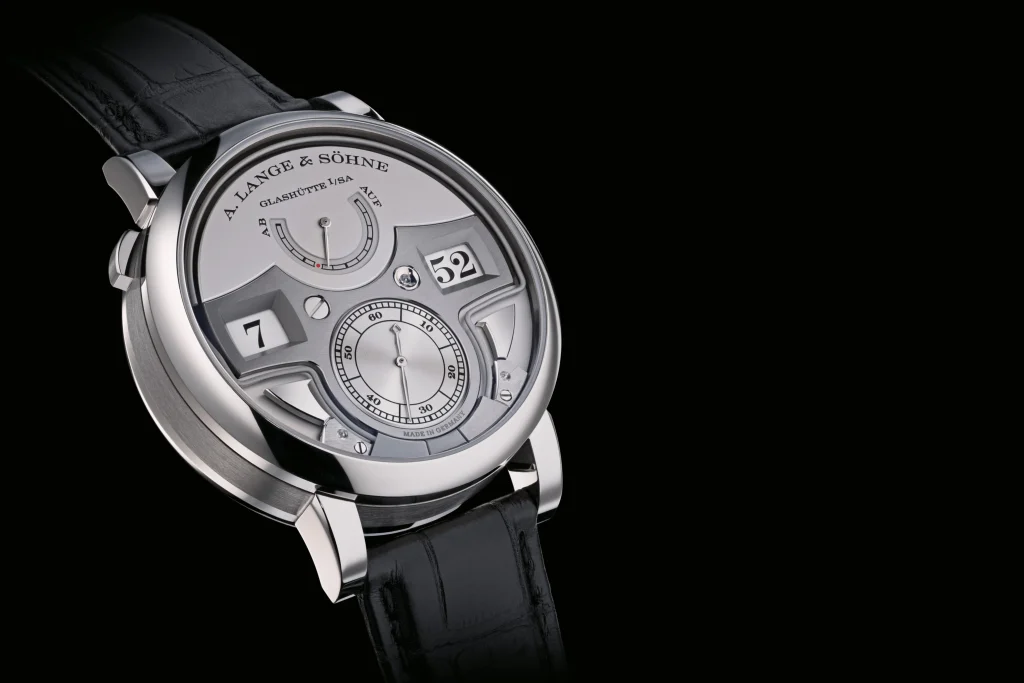
On the A. Lange & Söhne website bu You can test how Minute Repeater works using this link.
The arrangement is roughly as follows:
Before & watches It is played. Usually a low tone is used. If it is 10 o'clock, the low tone will be heard 10 times.
Sonra quarters It arrives. 15, 30, and 45 minutes are usually announced with a double tone. At 10:45, you will hear three double tones.
Last of all minutes It rings. These are the minutes that have passed since the last quarter. If it's 10:52, the high tone rings 7 times because 7 minutes have passed since 10:45.
So, the sequence that sounds like this at 10:52 is: 10 low beats, 3 even beats, 7 high beats. Mechanically, it's like poetry; from a user's perspective, it's a language that requires a bit of practice.
Jaeger-LeCoultre describes the minute repeater as a mechanism that operates when desired with a slider or button, distinguishing the hour, quarter, and minute information with different sounds. Therefore, the minute repeater... saat kaç? It gives an auditory, not a visual, answer to the question.
The Place of Minute Repeaters in Clock Complications
Among watch complications, the minute repeater holds a special place because it doesn't just display information; it simultaneously manages movement, energy, sound, and case acoustics. With complications like chronographs, calendars, or GMT, the user mostly reads the time using hands and discs. In a minute repeater, however, the mechanism reads the time and then converts it into a sequence of sounds.
Therefore, the challenge of a minute repeater isn't just the number of parts. Yes, the mechanism is complex. IWC states that the minute repeater mechanism can consist of more than 200 parts and is considered one of the most sophisticated complications that can be integrated into a wristwatch. But the real issue is ensuring that the sound produced by these parts is clean, rhythmic, balanced, and sufficiently audible.
Another critical element is... governor It is called a governor. This part controls the speed of the playback sequence. According to the technical explanation by Watches by SJX, the governor regulates the beat tempo by applying resistance to the speed of the repeater train. If the tempo is too fast, the tones can become mixed, and if it is too slow, the rhythm can be disrupted.
From Bersenti's perspective, the beauty of this is that the minute repeater takes time from being the most rational piece of information and turns it into a matter of character. When you listen to the same time from two different minute repeaters, both may be technically correct, but they can feel completely different emotionally.
Gong, Hammer, and Case: The Acoustic Side of the Clock Mechanism
In minute repeaters, the sound is usually produced by metal rings called gongs. These are located inside the case, around the mechanism. Small hammers strike these gongs, producing different tones. FHH explains that in the classic design, two hammers and two gongs were used; hours were indicated by a low tone, quarters by a double tone, and minutes by a high tone.
Here, the case is not merely a shell protecting the mechanism; it is also like the body of an instrument. The material, thickness, internal volume, back cover structure, waterproofing solutions, and the way the gongs are attached to the case can all affect the sound. A. Lange & Söhne emphasizes that for the Richard Lange Minute Repeater, the gongs are hand-tuned to acoustically match the platinum used in the case material, and that the material, shape, weight, hardness, and striking character of the hammers are important.
Therefore, evaluating a minute repeater is only... What is the case size in mm?, Which mechanism? or How many hours of power reserve? It's not enough to just look at it. The length of the sound, its clarity, the separation of tones, the tempo between beats, and the feeling left by the vibration are also important.
A good minute repeater shouldn't sound too metallic, rushed, or muffled. But there's no single universal right answer here. Some collectors prefer long resonance, while others seek a shorter, clearer, and more controlled tone. In a way, the minute repeater is the analog hi-fi world of mechanical watches.
A Subtle Turning Point in the History of Breguet and the Minute Repeater
One of the most important figures in the history of minute repeaters is Abraham-Louis Breguet. According to Breguet's official historical account, the brand founder developed the first percussion repeater watch to use a gong spring instead of a traditional bell in 1783. This solution reduced the watch's thickness while making the sound more harmonious and elegant.
This seemingly small technical move actually influenced the aesthetics of modern minute repeater architecture. The shift from bell-type solutions to gong springs allowed the mechanism to be more integrated, slimmer, and more refined within the case. This is what we see today in the minute repeaters of many high-end watch brands. the gong circling the mechanism This approach has its historical roots in this idea.
Here, Breguet The hero who invented everything all by himself It wouldn't be accurate to describe it like that. Repeater mechanisms have evolved over a multifaceted history. But Breguet's gong spring solution is a truly powerful turning point on the path of the minute repeater from pocket watch to modern high watchmaking object.
The Difference Between Minute Repeater and Grande Sonnerie
Minute repeater most of the time sonnerie hours They are confused. The main difference is the activation method. Minute repeater time. on request It rings. Grande sonnerie and petite sonnerie automatically announce the time at specific intervals.
According to Patek Philippe, the minute repeater can be manually activated at any time; the grande sonnerie chimes the hours and quarters automatically, while the petite sonnerie chimes the quarters automatically. Patek also states that its grande and petite sonnerie models are equipped with a minute repeater mechanism and a silent mode.
On the more accessible side, Christopher Ward C1 Bel Canto These models are not minute repeaters; they represent the idea of a sonnerie au passage (a sound that plays on the hour) in a modern and more accessible form.
This distinction is important because it changes the user experience for the collector. The minute repeater is more personal and controlled: you make the watch speak. The grande sonnerie, on the other hand, is more theatrical: the watch speaks to itself. Both are highly complicated, but they evoke different emotions.
Strengths of Minute Repeater
The greatest strength of a minute repeater is its ability to enhance the emotional dimension of a mechanical watch. Many complications add information; a minute repeater adds experience. Understanding time by listening to it, without looking at your watch, is a superfluous yet fascinating luxury in the modern world.
The second strong point is the display of craftsmanship. Making a good minute repeater cannot be solved with just CAD drawings or precise manufacturing. It requires assembly, adjustment, sound control, and fine-tuning by ear. Therefore, the minute repeater is one of the rare complexities that reveals the technical capabilities of brands.
The third aspect is the collector's character. Minute repeater watches typically come in limited production, with high craftsmanship and substantial price points. However, their value doesn't stem solely from rarity; the sound of each watch can carry subtle differences, even between similar models. This personalizes the sense of ownership.
Weaknesses and Realistic Questions
The minute repeater is a romantic complication, but it's not perfect. Its first weakness is its sensitivity to use. Setting the time, tampering with it, or forcing it while the timing mechanism is engaged can be risky in some models. Although modern watches have safety systems, these watches... will be easily abused every day They are not objects.
The second issue is water resistance. The case acoustics need to work for sound to escape, which can sometimes conflict with the goals of insulation and water resistance. Wired, writing about the Patek Philippe Ref. 5750, specifically notes that this model is not waterproof, mentioning the Fortissimo module designed for sound transmission. This isn't a general rule for every minute repeater, but it shows that a real balance between acoustics and durability was sought in the design of the complication.
The third point is the issue of price and maintenance. Minute repeaters are generally very expensive. Servicing processes also require more expertise than for ordinary three-hand watches. Furthermore, to truly appreciate a minute repeater, you need to connect with its sound, rhythm, and mechanical concept. one of the most serious complications It's not a watch to be bought casually.
What does a minute repeater mean to a collector?
For a collector, a minute repeater is often one of the last stops on their journey. Because of this complication, What is the clock doing? more than the question What does the clock make me feel? This raises the question.
The dial often lacks dramatic display. In fact, many minute repeaters appear quite simple. The real show is hidden within the case. When you slide the bolt, the watch momentarily transforms into a mechanical instrument. This makes the minute repeater more of an intimate complication than a showy one.
For Bersenti, the most interesting aspect of the minute repeater lies here: while this complication seems like the loudest form of luxury, it is actually one of the quietest. It speaks not to the crowd, but to the person holding their ear close to the watch.
Conclusion: Why Minute Repeater Still Fascinates?
A minute repeater isn't the most practical way to tell time in today's world. In fact, to be honest, it would lose from the start if you put it in a competition of practicality. But mechanical watchmaking hasn't always been about practicality anyway.
The value of a minute repeater lies in its ability to convert time into sound; to transform metal into vibration, and vibration into emotion. Well-made, it becomes more than just a technical complication; it's a small piece of acoustic architecture worn on the wrist. For those curious about modern examples from independent watchmaking... FP Journe The "Répétition Souveraine" section in his writing is also a good reference.
That's why What is a Minute Repeater? The answer to that question is simply... clock chiming mechanism No, it is not. A more accurate answer might be: A minute repeater is where mechanical watchmaking goes beyond simply reading the time and transforms it into an audible moment.
FAQ
What is a minute repeater?
A minute repeater is a mechanical watch complication that the user activates with a slider or button, and which audibly announces the current time with hour, quarter, and minute ticks.
How does a minute repeater clock work?
Typically, the bolt mechanism next to the cash register is wound up and the chiming sequence begins. Hammers strike gongs, first announcing the hours, then the quarters, and finally the minutes elapsed after the last quarter.
What is the difference between a minute repeater and a grande sonnerie?
The minute repeater plays on demand. The grande sonnerie plays the hours and quarters automatically. The petite sonnerie also has an automatic playing system, but uses a more limited sequence than the grande sonnerie.
Why are minute repeaters expensive?
Because the mechanism is very complex, assembly and adjustment require high expertise, sound quality requires fine-tuning, and production quantities are generally low.
Is the minute repeater suitable for daily use?
While usable, most minute repeaters are a delicate and expensive high-complication device. They require a more careful approach than ordinary watches in terms of water resistance, shock resistance, servicing, and usage instructions.
What is a decimal repeater?
Unlike the classic minute repeater, the decimal repeater announces hours, 10-minute intervals, and minutes. The classic minute repeater, on the other hand, announces hours, quarters, and minutes elapsed since the last quarter. Hodinkee notes that the decimal repeater therefore provides a more intuitive auditory timekeeping.
What determines the volume of a minute repeater?
The structure of the gongs, the setting of the hammers, the case material, the case thickness, the internal volume, the structure of the back cover, and the playing tempo determined by the governor all play a significant role in the sound character.