H. Moser's Retrograde Seconds Trio: The Show Shrunk, the Price Grew.
 Berk OztoprakAuthor
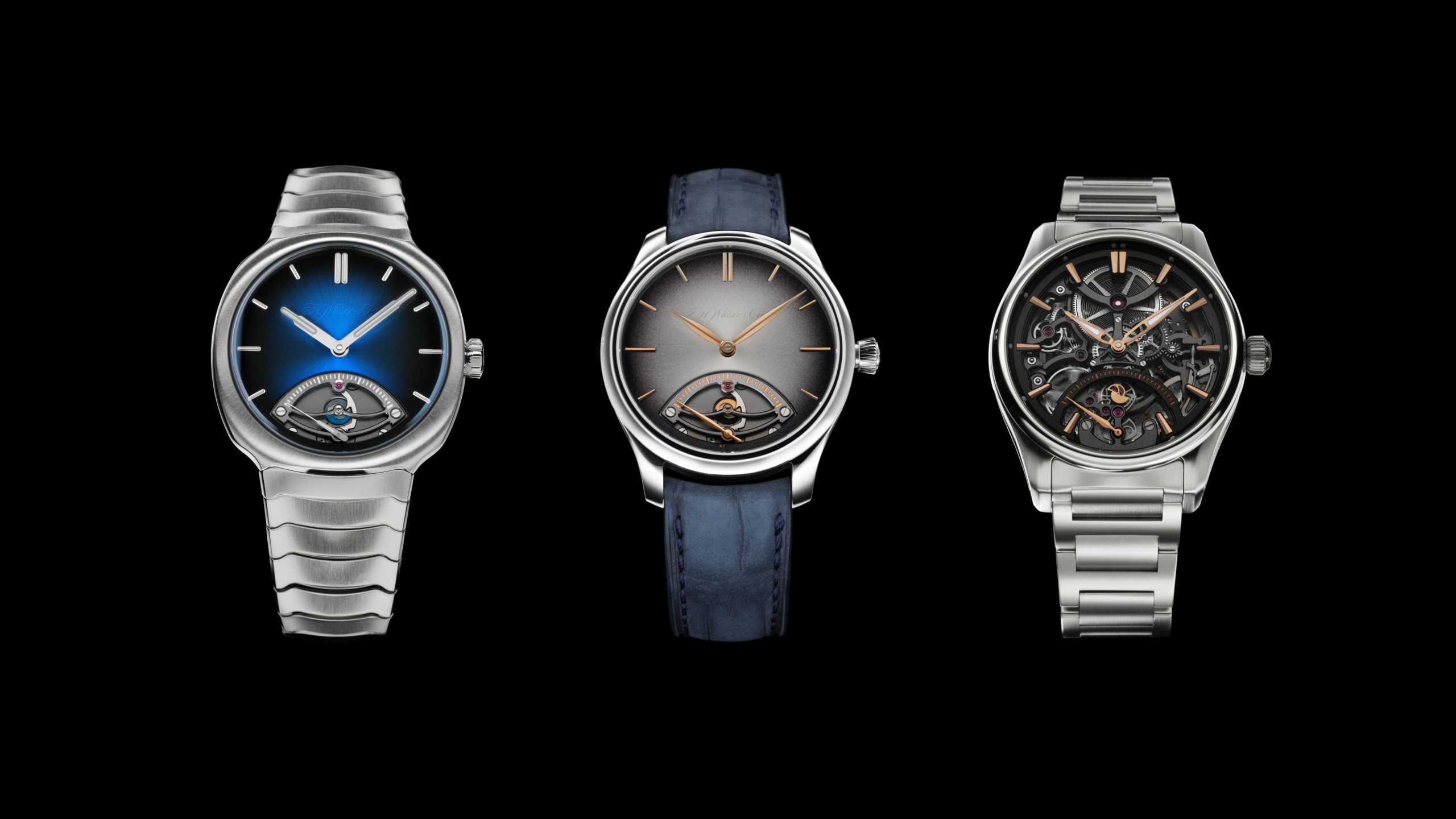
Introduced in 2024 by H. Moser & Cie., the Pioneer Retrograde Seconds featured a seconds hand that traced an arc at 6 o'clock, abruptly returning to its starting point after 30 seconds. The brand has now brought this design to three collections: the Pioneer Skeleton, Streamliner, and Endeavour. All three come in a 40mm steel case and boast a 72-hour power reserve.
The difference between the first model and the new trio is immediately apparent on paper. The Pioneer Retrograde Seconds, coded Ref. 3250-1200, had a diameter of 42,8 mm and a thickness of 14,2 mm. In the new trio, the diameter is reduced to 40 mm, and the thickness varies between 11,2 and 12,1 mm. According to Oracle of Time, the thickness of the movement has also decreased from 6,5 mm to 5,5 mm. The display remains the same, but the watch it houses has become smaller.
How does retrograde seconds work?
A classic seconds hand completes a full revolution on the dial every 60 seconds. In a retrograde display, the hand doesn't complete a revolution; instead, it moves along an arc, bouncing back to zero at the end of the scale. A different example combining a retrograde minute hand with an industrial interface can be seen in our review of the Otsuka Lotec No. 8. In such displays, the hand is usually attached to a rack and pinion that follows the edge of a rotating snail cam. When the cam drops from its highest point, a spring pulls the rack and pinion back to the starting point.
Moser's scale is 30 seconds, meaning the hand jumps back twice every minute. The brand says the design is inspired by measuring instruments and speedometers. There's no need for this jump to read the time; the seconds could be displayed with a classic hand. The value of the display comes from the short, rapid movement that constantly repeats on the dial. This is what makes the 2024 model memorable.
Pioneer Skeleton: the apparatus itself is also visible.
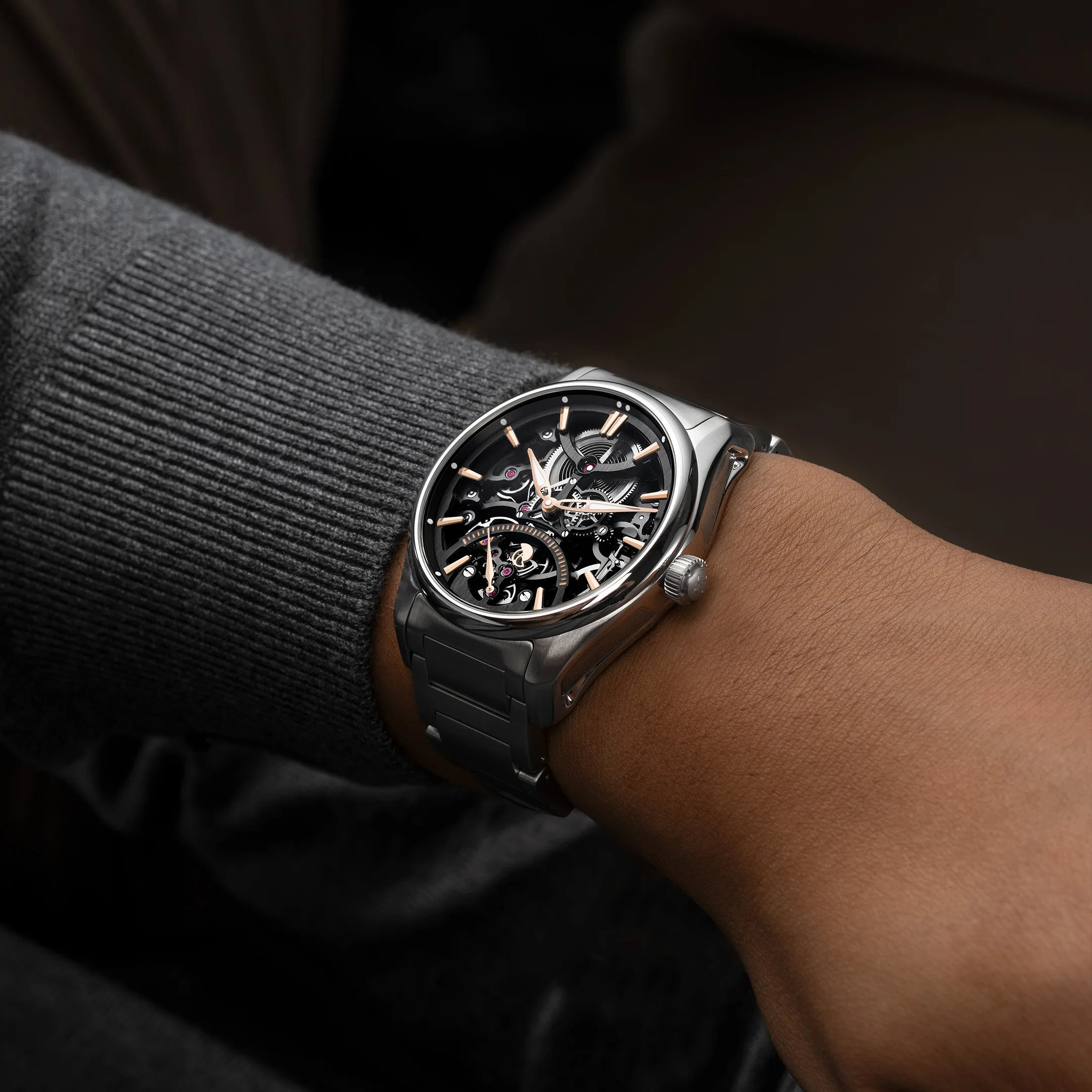
Ref. 3251-1200 is the most expensive and most revealing model of the trio. The dial has been completely removed, with the retrograde mechanism exposed at the 6 o'clock position between the anthracite bridges. The leaf-shaped hands, faceted application indices, and retrograde scale are distinguished from the dark skeleton by rose gold accents. This allows the components that cause the hands to return every 30 seconds to be seen through the dial.
Inside is the HMC 251 caliber. Moser states that this automatic movement was developed from the HMC 250 and that the retrograde mechanism was designed in-house. The skeleton structure is drawn with symmetry in mind, and the rotor is made of gold. The 40 x 12 mm case uses a screw-down crown and is water-resistant to 120 meters. The watch comes with a steel bracelet and a khaki-colored rubber strap.
Streamliner: a hand on a train-derived box that moves back and forth.
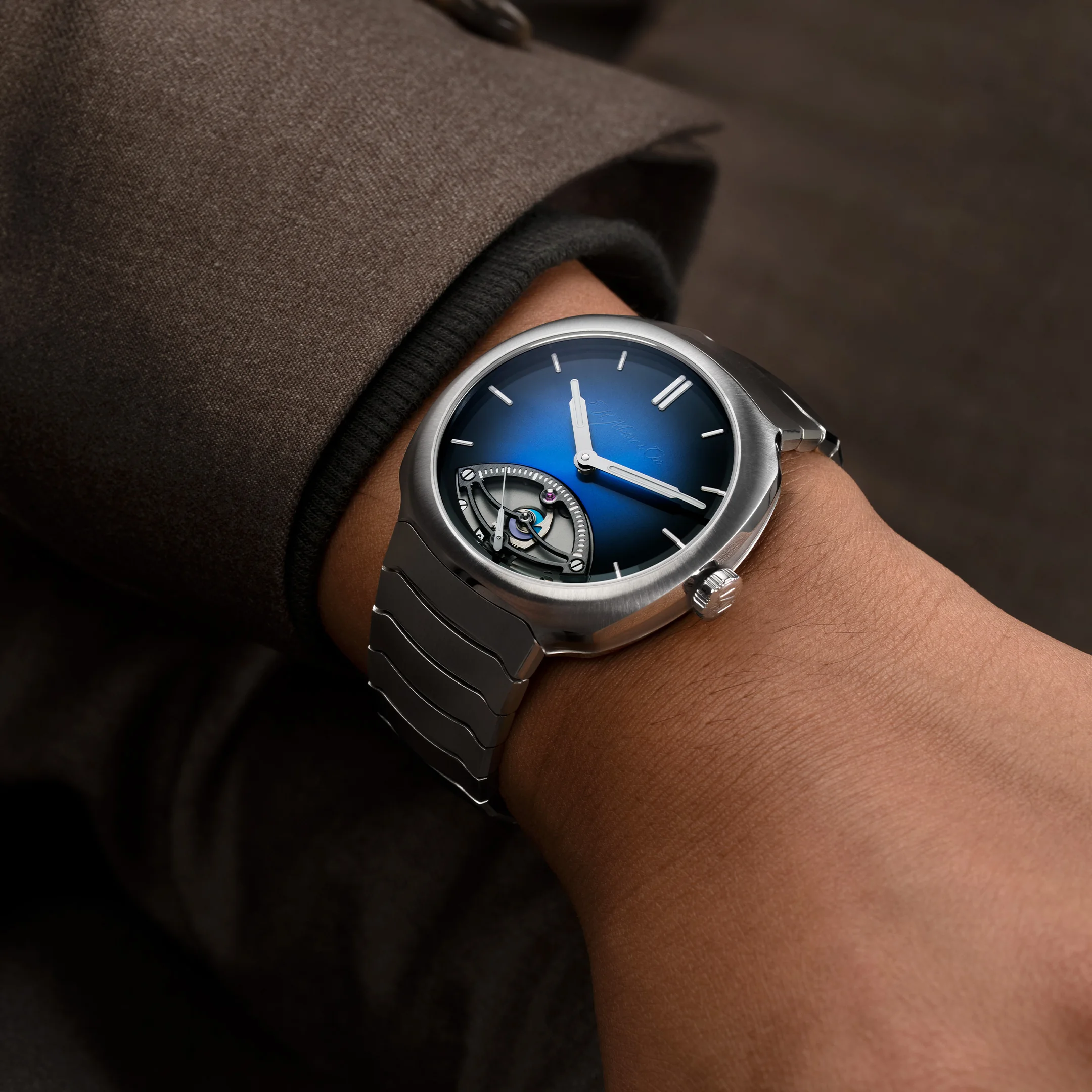
The Streamliner's cushion-shaped case and integrated bracelet are based on the streamlined trains of the 1930s, from which the collection takes its name. Ref. 6252-1200 features a Midnight Blue fumé dial with a sunburst pattern, and the retrograde scale at 6 o'clock stands out as a bright light within this deep blue. The author of Oracle of Time likens the reciprocating hands to connecting rods linking train wheels—a fitting analogy given the collection's origins.
The case measures 40 x 12,1 mm and is water-resistant to 120 meters. The Moser logo is printed on the dial in clear lacquer and is barely visible unless the light is at the right angle. Because there is no other lettering or counter in the center of the Fumé dial, the eye is drawn directly to the retrograde scale.
Endeavour: the slimmest and simplest model of the trio.
Ref. 1252-1200 retains the classic lines of the Endeavour. The 40 x 11,2 mm case is the slimmest of the three. The Blackor fumé dial opens to grey in the center and darkens to black towards the edges. The logo is also printed here in clear lacquer. The watch comes with a hand-stitched nubuck alligator leather strap and a steel pin buckle.
The Endeavour's water resistance remains at 30 meters, a quarter of the 120 meters found in the Pioneer and Streamliner. This is an expected choice given the collection's identity as a city watch, but it's still the first difference someone choosing between the three watches should know.
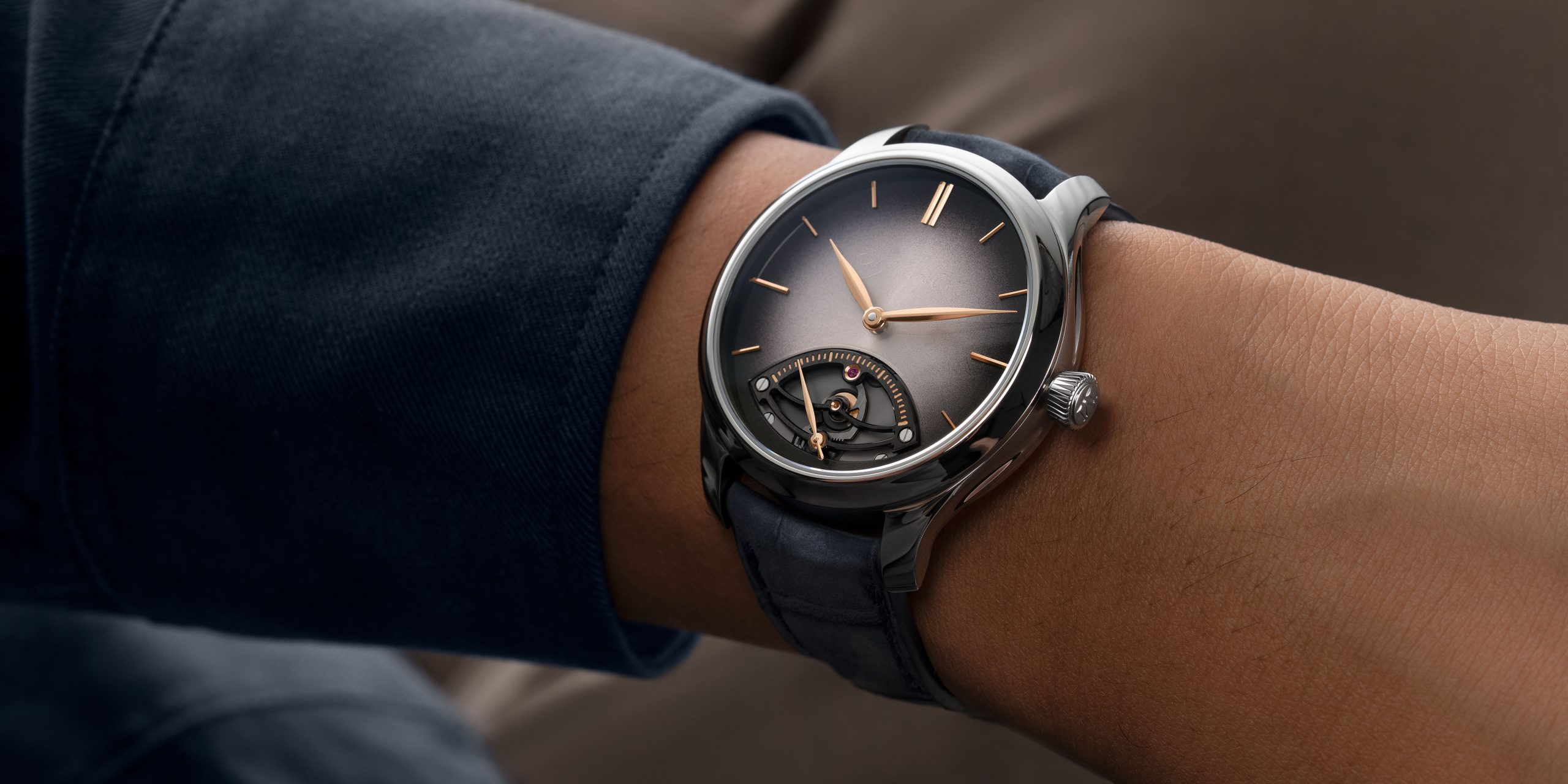
The same indicator, two different calibers.
While the three watches perform the same function on the dial, their internals are different. Moser describes the HMC 252, used in the Streamliner and Endeavour, as an improved version of the HMC 250, noting that the caliber is supplied by Agenhor. The Geneva-based complication workshop Agenhor was also behind the retrograde module in the 2024 model. The HMC 252 features a newly designed rack and pinion and tungsten rotor on the dial side.
For the HMC 251 in the Pioneer Skeleton, Moser offers a different description: the retrograde mechanism was developed in-house, and the rotor is gold. This distinction is further emphasized in the skeleton model, where the entire mechanism is visible to the naked eye. All three calibers operate at a frequency of 21.600 A/s (3 Hz) and offer a power reserve of 72 hours.
Technicial Specifications
| Pioneer Skeleton Retrograde Seconds | Streamliner Retrograde Seconds | Endeavour Retrograde Seconds | |
|---|---|---|---|
| Reference | 3251-1200 | 6252-1200 | 1252-1200 |
| Kasa | Steel, 40 mm diameter, 12,0 mm thickness, screw-type mounting handle. | Steel, 40 mm diameter, 12,1 mm thickness, screw-type mounting handle. | Steel, 40 mm diameter, 11,2 mm thickness. |
| Waterproof | 12 ATM / 120 meters | 12 ATM / 120 meters | 3 ATM / 30 meters |
| Dial | Fully skeletal, gold hands and indices with Super-LumiNova. | Midnight Blue fumé, sunbeam pattern | Blackor fumé, sunbeam pattern |
| Mechanism | HMC 251, automatic, fully skeletonized. | HMC 252, automatic | HMC 252, automatic |
| Retrograde mechanism | Developed within Moser. | Agenhor sourced caliber | Agenhor sourced caliber |
| Rotor | Gold | Tungsten | Tungsten |
| Frekans | 21.600 A/s (3 Hz) | 21.600 A/s (3 Hz) | 21.600 A/s (3 Hz) |
| Power reserve | 72 hours | 72 hours | 72 hours |
| Functions | Hour, minute, 30-second retrograde second | Hour, minute, 30-second retrograde second | Hour, minute, 30-second retrograde second |
| Strap / bracelet | Steel bracelet and khaki rubber strap | Integrated steel bracelet | Hand-stitched nubuck crocodile leather, steel pin buckle |
| Price | 35.000 CHF, excluding VAT | 29.900 CHF, excluding VAT | 27.900 CHF, excluding VAT |
| Production | No limited production information was provided. | No limited production information was provided. | No limited production information was provided. |
Bersenti comment
The most significant change in the new trio is the size. The reduction from 42,8 mm to 40 mm transforms the retrograde seconds hand from a single model number into a common language across Moser's three main collections. The same indicator appears as a technical component on the sporty Pioneer, a machine detail on the integrated-ring Streamliner, and a single moving ornament on a simple dial in the Endeavour.
The price, however, has gone in the opposite direction. The 2024 model was announced at 19.900 CHF, while the most affordable of the new trio, the Endeavour, costs 27.900 CHF excluding taxes. The open skeleton and in-house retrograde mechanism in the Pioneer Skeleton partly explain this difference. In the Streamliner and Endeavour, the difference has to be compensated by thinner calibers and new cases. Of the three, the Pioneer Skeleton is the most revealing in terms of watchmaking, because it is the only watch that not only shows the hands that rebound every 30 seconds, but also reveals the parts that cause it to rebound.
Keep reading
Related readings to this article